

This is an official channel of the European Space Agency, where you can find a variety of podcast series bringing you closer to the people, missions and discoveries that are expanding our understanding of the Universe.
Episodes

6 days ago
6 days ago
37 min
Guided by a sonification created with data from the ESA-led Solar Orbiter mission, we explore some of the mysteries of our Sun, how Solar Orbiter is studying them, and how sound can make astronomy more accessible.
In this episode of Expedition Sound, we set off on our first journey of this podcast series and travel to the Sun – our familiar, friendly neighbourhood star.
Along the way, we meet one of Solar Orbiter’s project scientists Miho Janvier, who helps us uncover the science behind solar flares, the solar cycle, and the mysteries that scientists are still trying to solve about the Sun. We also hear from Nic Bonne, a blind astronomer and science communicator at the University of Portsmouth, about how sonification can open new doors to astronomy and create richer ways for everyone to experience the Universe.
Hosted by Zsófi Szalavári
Check out the sonification of this episode here: esa.int/ESA_Multimedia/Videos/2024/12/See_and_hear_three_years_of_solar_fireworks
Learn more about ESA’s Solar Orbiter mission: esa.int/SolarOrbiter
Learn more about ESA’s Smile mission: esa.int/Smile
Find out more about Nic Bonne’s Tactile Universe project: tactileuniverse.org/
Many thanks to Klaus Nielsen (DTU Space / Maple Pools) for making the sonification in this episode. If you would like to hear more sonifications and music by this artist, please visit: linktr.ee/maplepools
Original theme music produced by Marci Szalavári (soundcloud.com/septrone-hd).
Expedition Sound is a podcast series by the European Space Agency (ESA) in which you’re invited to explore the Universe through your ears. Guided by sonifications – the translation of data into sound – we travel from our Sun out into the depths of space to uncover what the space telescopes of ESA’s science missions teach us about the Universe.
Nov 25, 2021
Nov 25, 2021
19 min
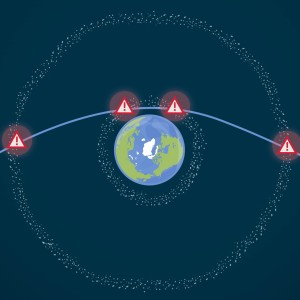
We talk to Julia Schwartz, expert in flight dynamics, and Klaus Merz, space debris, about Solar Orbiter's upcoming risky Earth flyby. On 27 Nov, it will pass almost as close as the International Space Station in one of the closest flybys on record, which will see the spacecraft pass through two regions of hazardous debris. Could Solar Orbiter swerve from collision, if needed? Has the recent 'fragmentation event' increased the risk?
Jul 16, 2021
Jul 16, 2021
39 min
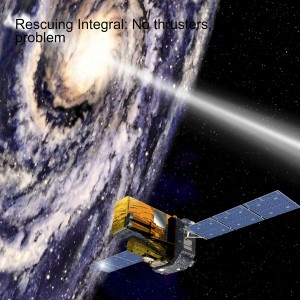
A year ago today, a failure on the Integral spacecraft meant it fired its thrusters for likely the last time. Hear Richard Southworth, Operations Manager for the mission explain how in the 365 days since, the spacecraft in Earth orbit has continued to shed light on the violent gamma ray Universe.
Not only that, Integral should soon be working even more efficiently than before, as mission control teams implement an ingenious new way to control the 18-year-old spacecraft.
May 19, 2021
May 19, 2021
16 min
ESA needs you. We need a name for our new spacecraft. Its mission? To spot potentially hazardous solar storms before they reach Earth.
We speak to Jussi Luntama, ESA's Head of Space Weather about the mission, why it needs a new name, and what kind of submissions he's hoping for.
Submit your proposal at: https://www.esa.int/Safety_Security/Space_weather/Name_ESA_s_new_mission
Apr 28, 2021
Apr 28, 2021
21 min
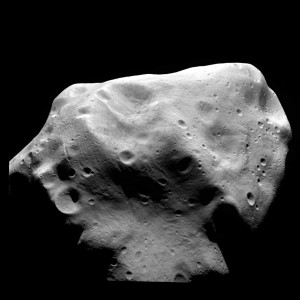
Once every two years, asteroid experts around the globe meet up and pretend an asteroid impact is imminent. Why? To prepare for the likely – but plausible – scenario in which this comes true.
In this episode, we speak about the hypothetical impact scenario playing out at this year's Planetary Defense Conference and why it matters, with Detlef Koschny, ESA's Head of Planetary Defence.
Get the full story on hypothetical asteroid 2021 PDC on the Rocket Science blog: https://blogs.esa.int/rocketscience/2021/04/26/deep-fake-impact/
Apr 22, 2021
Apr 22, 2021
18 min
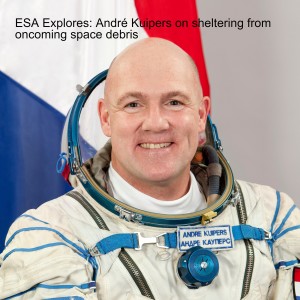
André Kuipers is one of a handful of astronauts who has had to 'shelter-in-place' from a piece of marauding space debris.
In 2012, a debris fragment was spotted heading towards the International Space Station. Its orbit was hard to predict but it looked like it could pass at a distance of approximately 10 kilometres: that meant code red.
ESA astronaut André, along with his fellow passengers, had to seek shelter in the two Soyuz spaceships which function as safe houses and as lifeboats. Fortunately, the debris passed safely by. We spoke to André about what this experience was like, and also to his wife Helen who recounts the exact moment she found out.
Apr 14, 2021
Apr 14, 2021
28 min
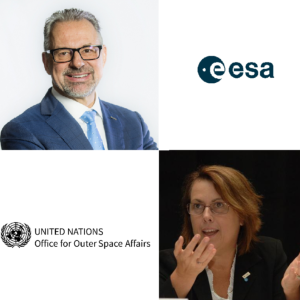
In the final episode of the ESA-UNOOSA podcast on space debris, Josef Aschbacher, Director General of the European Space Agency, and Simonetta di Pippo, Director of the UN Office for Outer Space Affairs, discuss this topic of global concern.
What are the two leading organisations doing to tackle space debris? What more needs to be done? Is there reason to be hopeful?
Apr 13, 2021
Apr 13, 2021
21 min
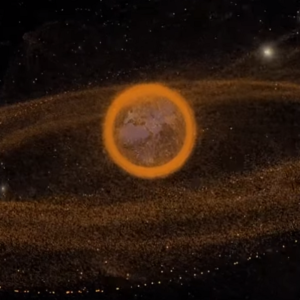
Space may seem vast, but the orbits around Earth in which satellites reside are a limited natural resource. Since the beginning of the space age, millions of debris fragments have been created which now threaten any spacecraft that crosses their path.
So what can we do to protect these vulnerable regions for future generations? Find out in episode nine of the ESA-UNOOSA space debris series, with Stijn Lemmens and Tanya Keusen.
While you listen, check out the corresponding ESA-UN infographic that illustrates this topic: www.esa.int/ESA_Multimedia/Imag…ainability_of_space
Mar 31, 2021
Mar 31, 2021
18 min
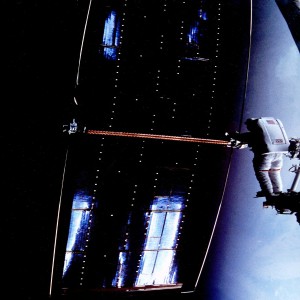
Humans in space have a lot to contend with, and for those orbiting in low-Earth orbit, space debris is a real concern.
So what's the risk to astronauts on-board the International Space Station? How safe are they when they perform a space walk, and what are the "clanking" sounds they report hearing? Find out in episode 8 of the ESA-UNOOSA space debris podcast with Vitali Braun and Ottavia Pesce.
While you listen, check out the corresponding infographic that illustrates this topic: www.esa.int/ESA_Multimedia/Imag…d_human_spaceflight
**Links referred to in the podcast:
The robotic arm on the International Space Station checks the Columbus module for signs of impact: www.esa.int/Safety_Security/Hun…_science_laboratory
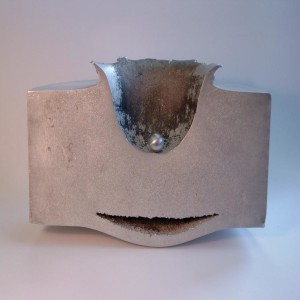
The 7 mm-diameter impact chip in the Cupola of the ISS, gouged out by a tiny piece of space debris: www.esa.int/ESA_Multimedia/Imag…p#.YGQpHyPoJgY.link
Mar 31, 2021
Mar 31, 2021
18 min
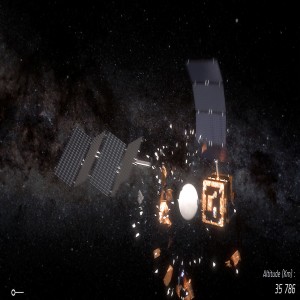
Debris in orbit varies from millions of millimetre-sized particles to thousands of much larger objects like defunct satellites and rocket parts. As such the damage debris can cause varies from a gradual degradation of satellite parts over time to immediate and total destruction.
Find out about the damage debris can do - including leading to the "Kessler syndrome" - in episode 7 of the ESA-UN space debris podcast with Beatriz Jilete and Markus Woltran.
While you listen, check out the corresponding ESA-UN infographic that illustrates this topic: www.esa.int/ESA_Multimedia/Imag…act_of_space_debris
Mar 31, 2021
Mar 31, 2021
24 min
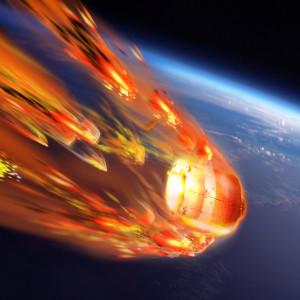
The millions of fragments of debris in orbit today are the direct result of 'fragmentation events' in the past. But how do we know what caused the 550 known, debris-creating events to date? And what can we learn from them?
In episode 6 of the ESA-UNOOSA space debris series, Vitali Braun and Jorge del Rio Vera discuss the various past events that have lead to today's debris environment, and what we can expect in the future.
While you listen, check out the corresponding infographic that illustrates this topic: www.esa.int/ESA_Multimedia/Imag…ace_debris_creation.
Mar 15, 2021
Mar 15, 2021
17 min
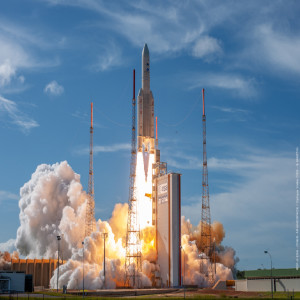
What goes up, nearly always comes back down. Roughly 100 satellites and rocket bodies reentered Earth's atmosphere every year in the last decade. It might sound scary, but atmospheric reentries are nothing to be worried about - in fact they are a fundamental tool in minimising the creation of space debris and ensuring a sustainable future in space.
In this podcast, episode 5 in the ESA-UN space debris series, Stijn Lemmens and Jorge del Rio Vera it discuss the risk from reentries and why they are so important.
While you listen, check out the corresponding ESA-UN infographic that illustrates this topic: www.esa.int/ESA_Multimedia/Imag…e_role_of_reentries.
Mar 3, 2021
Mar 3, 2021
17 min
Since the beginning of the space age, with the launch of Sputnik in 1957, we have launched thousands of rockets carrying more than ten thousand satellites into space.
In recent years, this number has dramatically increased, as well as the variety of missions being flown. In this podcast, episode #4 in the ESA-UNOOSA space debris series, Ian Freeman and Francesca Letizia discuss what these changes mean for the future of spaceflight and the creation of space debris, While you listen, check out the corresponding infographic that illustrates this topic: https://www.esa.int/ESA_Multimedia/Images/2021/03/We_re_launching_more_than_ever#.YD9ND2zPUaw.link
Feb 26, 2021
Feb 26, 2021
16 min
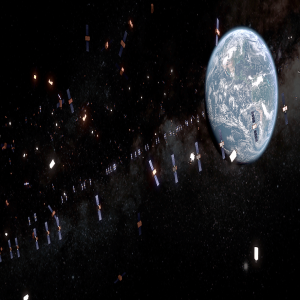
Space might seem an empty, vast expanse, but satellites in Earth's orbit face the constant risk of collision - with other satellites and rockets, dead or alive, or with fragments of their debris.
It is now routine for operators of spacecraft in busy highways to divert their mission out of harms way. In fact at ESA, each mission flown performs on average two 'collision avoidance manoeuvres' per year.
In this podcast, episode 3 in the ESA-UN space debris series, Benjamin Bastida Virgili and Hazuki Mori discuss the cost of these manoeuvres and what can be done.
While you listen, check out the corresponding ESA-UN infographic that illustrates this topic.
Feb 26, 2021
Feb 26, 2021
15 min
Our planet's atmosphere gradually slows down satellites in orbit and brings them back down to Earth. However, depending on their altitude, this process can take an extremely long time. Had the dinosaurs launched a satellite into the furthest geostationary orbit, it would still be up there today. So, what do we do with spacecraft once they reach the end of their lives?
In episode 2 in our ESA-UN space debris series, Francesca Letizia and Xing-Yi Ang discuss the problem of slowly returning satellites, and what needs to be done to responsibly dispose of them at the end of their lives.
While you listen, check out the corresponding ESA-UN infographic that illustrates this topic.
Feb 26, 2021
Feb 26, 2021
13 min
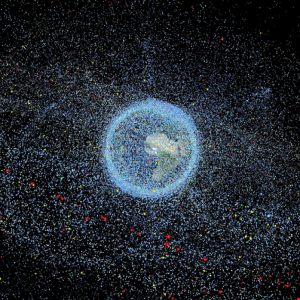
Satellites in orbit share near-Earth space with millions of fast-moving and dangerous debris objects. Tim Flohrer, Head of ESA's Space Debris Office, and Nathalie Ricard, Scientific Officer at the UN Office for Outer Space Affairs (UNOOSA), discuss the scale of the debris problem, asking what are our satellites are up against?
While you listen, check out the corresponding ESA-UN infographic that illustrates this topic.